


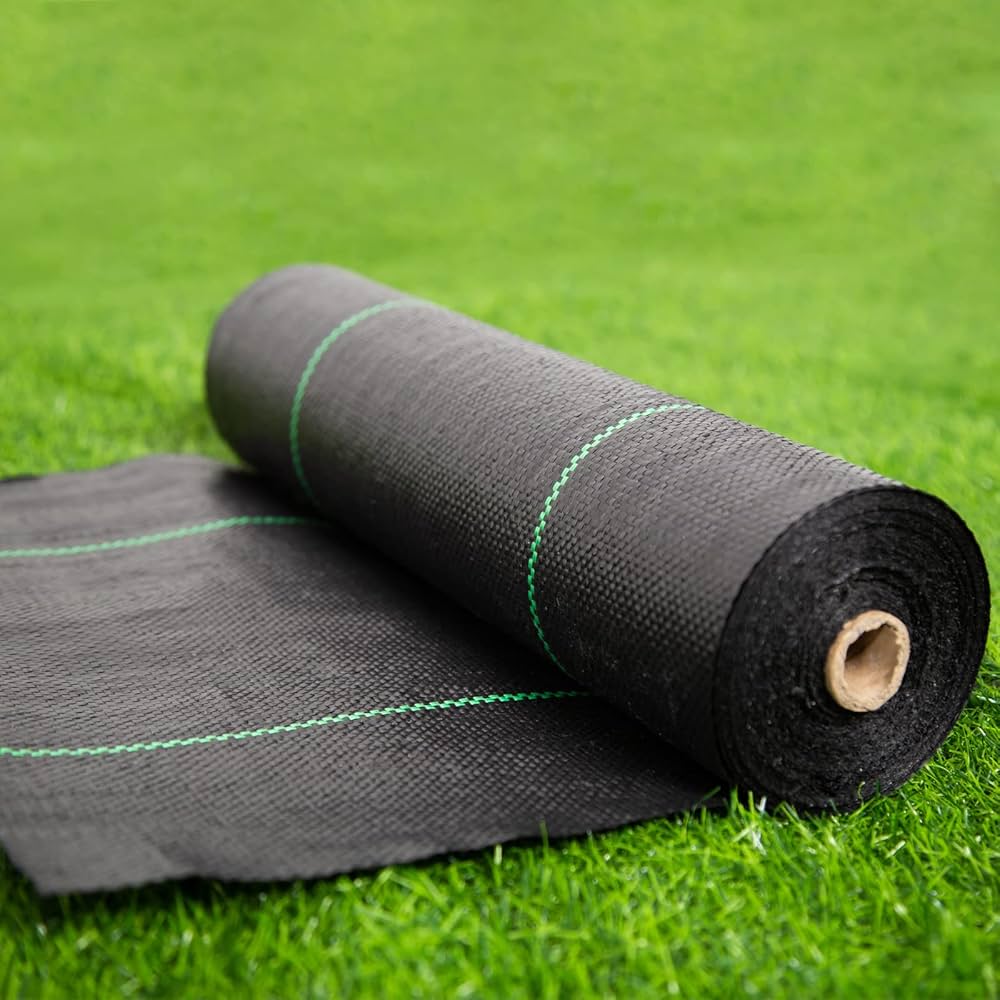
 Ground Layer
Ground Cover / Weed Mat
For permanent pathways and orchard floors where mulch film would not last.
View product
Ground Layer
20 to 100 micron, silver-black and white-black, in 1m and 1.2m widths. Weed suppression, moisture retention and root zone temperature — one layer doing three jobs.
Overview
Mulch film is the highest-leverage input in open field horticulture and the one most often bought on price per kilogram. That last part is the mistake: the film that costs less per kg is usually thinner, and thinner film means you are back in the field mid-season with a torn bed and a weed problem.
A correctly specified film does three things simultaneously. It suppresses weeds by denying light to the bed. It retains soil moisture by blocking evaporation, cutting irrigation demand substantially. And it controls root zone temperature — which direction depends on the colour you chose.
That third function is where the silver-black versus white-black decision lives. Silver reflects light back up into the canopy, which suppresses aphids and thrips that navigate by light gradient, and keeps the root zone cooler. White-black reflects more heat away and cools more aggressively — useful in the hottest months and the hottest districts. Neither is universally correct. The season, the crop and the district decide.
The thickness decision is a straight trade between cost and crop duration. 20–25 micron is short-cycle economics. 50–100 micron survives a long crop and mechanical traffic. Choosing 25 micron for an eight-month crop is a false economy you pay for in labour.
Features
No light reaching the bed means no weeds. This alone often justifies the film in labour terms.
Blocks evaporation from the bed surface — a direct and measurable irrigation saving.
Silver cools and repels pests by reflection; white-black cools harder. Colour is a specification, not a preference.
The black layer blocks light, the silver or white layer reflects. Two functions, one film.
20–25 micron for short cycles, 50–100 for long crops and mechanical traffic.
The film sits in full sun for the whole crop. Without the UV package it embrittles and shreds.
Specifications
Thickness against crop duration, colour against season and district, width against your bed geometry.
| Thickness | Type | Width | Roll Length | Typical Use |
|---|---|---|---|---|
| 20 micron | Silver-black | 1 m / 1.2 m | 400 m / 800 m | Short cycle, light soils |
| 25 micron | Silver-black | 1 m / 1.2 m | 400 m / 800 m | Standard vegetable, 3–4 month crop |
| 25 micron | White-black | 1 m / 1.2 m | 400 m / 800 m | Hot districts, summer cycles |
| 30 micron | Silver-black | 1 m / 1.2 m | 400 m / 800 m | Medium cycle, general purpose |
| 50 micron | Silver-black | 1 m / 1.2 m | 400 m | Long cycle, mechanical traffic |
| 100 micron | Silver-black | 1 m / 1.2 m | 400 m | Extended crops, heavy handling |
Thickness figures are nominal and subject to standard extrusion tolerance. Width should match your bed top plus adequate anchoring margin on both sides — film that is exactly bed-width will lift in the first wind. Colour selection is season and district dependent; carrying one specification year-round is usually wrong for at least one of your cycles.
Applications
Open field and under cover, anywhere the bed surface is costing you water and weeding.
Advantages
Mulch film is a per-hectare cost that displaces recurring labour and water costs. In most Indian vegetable systems the payback arrives inside a single crop.
Gallery
Industries
FAQ
Season and district, not preference. Silver-black reflects light up into the canopy, which disrupts aphids and thrips that navigate by light gradient, and moderates root zone temperature. White-black reflects more heat away and cools the root zone more aggressively — the better choice for the hottest districts and peak summer cycles. Many growers run silver-black as their default and switch to white-black for summer plantings. Carrying one specification across every cycle is usually wrong for at least one of them.
Match it to crop duration and how much traffic the bed sees. 20–25 micron suits short cycles of three to four months on light soils with careful handling. 30 micron is a reasonable general default. 50 to 100 micron is for long-duration crops, mechanical operations, or anywhere the film will take foot and equipment traffic. Choosing 25 micron for an eight-month crop looks cheaper on the invoice and costs more in mid-season repair labour and lost weed control.
Enough to matter, though the honest answer is that it depends heavily on your soil, climate and irrigation method, and we would be making up a number if we gave you a percentage. The mechanism is straightforward: film blocks evaporation from the bed surface, so a larger fraction of applied water reaches the root zone instead of the atmosphere. The saving is largest in hot, dry, windy conditions on light soils and smallest in humid conditions on heavy soils. Combined with drip beneath the film, it is the standard water-efficient configuration.
Edges buried in soil on both sides of the bed, with adequate margin beyond the bed top — this is why width selection matters. Film cut exactly to bed width has no anchoring margin and will lift in the first strong wind, at which point you have a sail rather than a mulch. Some growers additionally use soil bridges across the bed at intervals on exposed sites. Get the width right at ordering and the anchoring is straightforward.
It has to be lifted and disposed of, and this is the genuine downside of plastic mulch that nobody selling it likes to discuss. Thicker film lifts more cleanly in one piece; thin film tears and fragments, leaving plastic in the soil that accumulates across seasons. This is another argument for not going too thin on long crops — a 20 micron film after eight months tends to come up in pieces. Plan lifting into your end-of-crop labour rather than treating it as an afterthought.
Enquiry
Send the crop, the planting season, your district and your bed width. You will get colour, micron and width specified against those rather than against stock availability.
Related
Products that typically ship in the same order.
Ground Layer
For permanent pathways and orchard floors where mulch film would not last.
 Field Systems
 Propagation
 Protection