 Protection
Agro Shade Nets
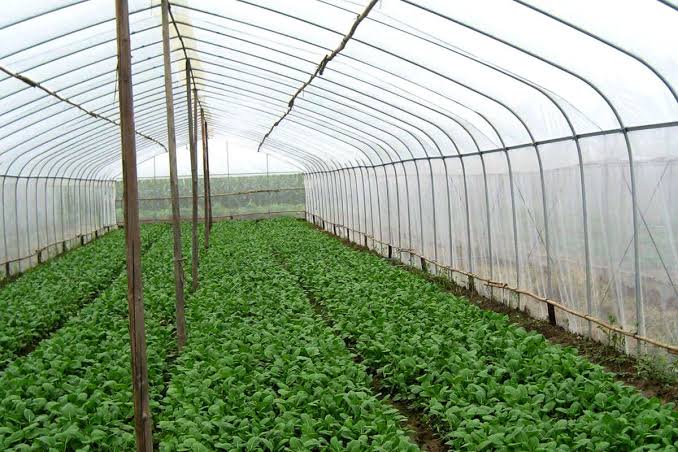
Rearing house shading — temperature and humidity drive the whole rearing.
View product
Shading & Netting
Bed nets, mountage netting and rearing house shade. Sericulture is a labour equation — the right net is the difference between a manageable rearing and an unmanageable one.
Overview
Sericulture runs on labour, and bed cleaning is where most of it goes. A rearing bed has to be cleaned of litter and residue repeatedly through the instars, and every cleaning is an opportunity to injure worms, spread disease, or simply consume hours you do not have.
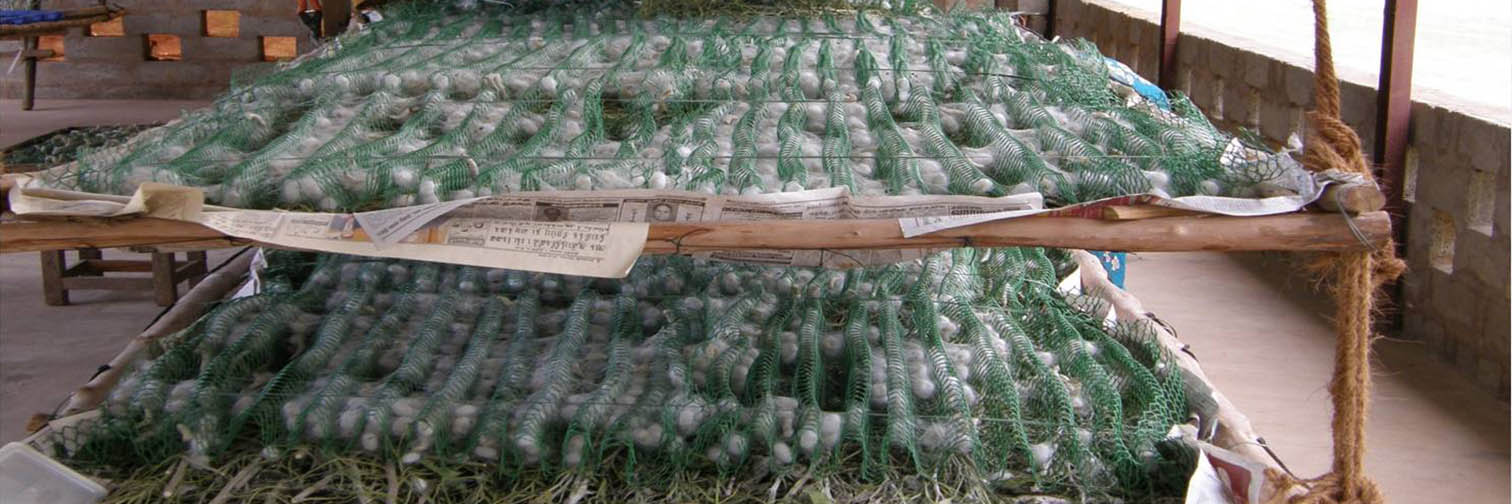
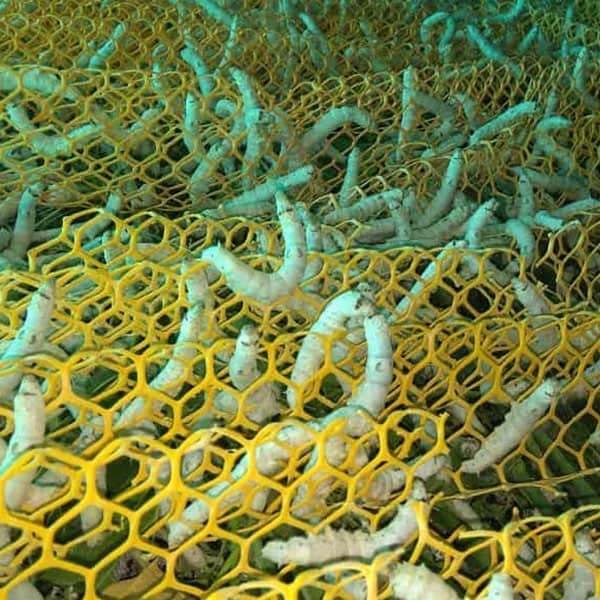
Bed netting exists to solve this. Lay the net over the bed, add fresh leaf on top, and the worms migrate up through the mesh to the food. Lift the net and the worms come with it — the litter stays behind. What was an hour of careful hand-picking becomes a lift-and-transfer. Mesh size has to match the instar: too fine and the worms cannot pass, too coarse and the litter comes through with them.
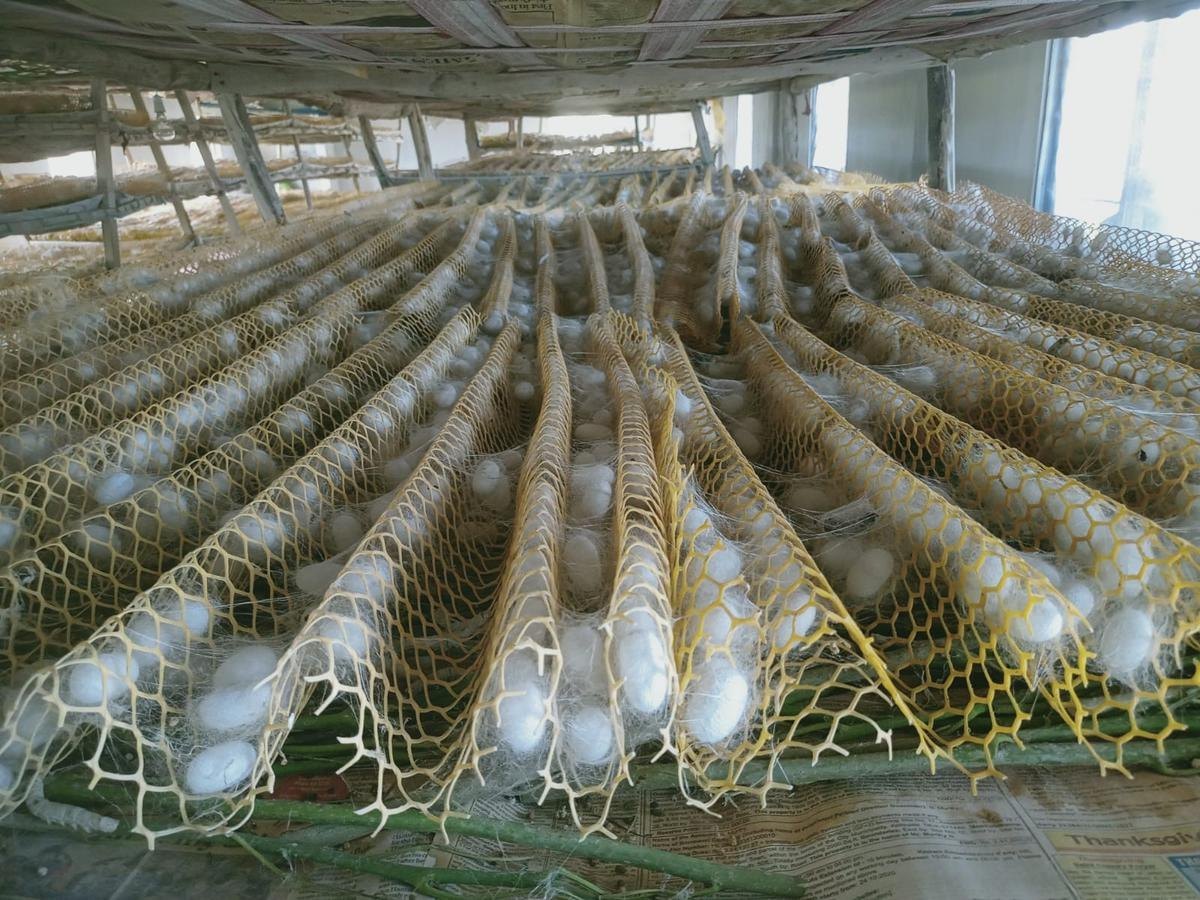
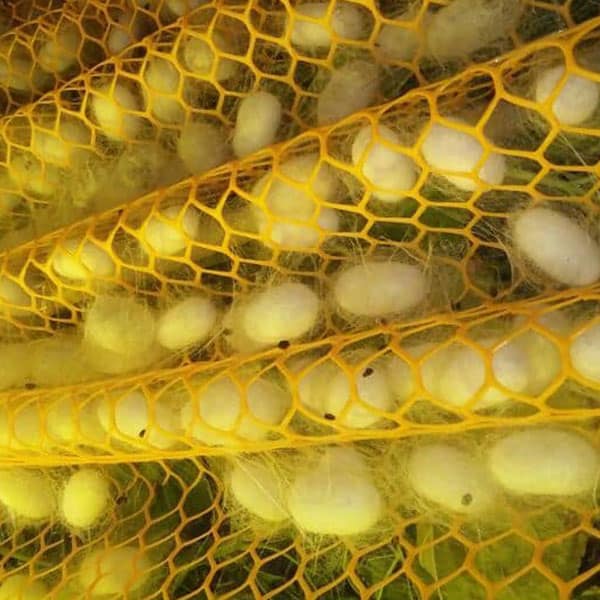
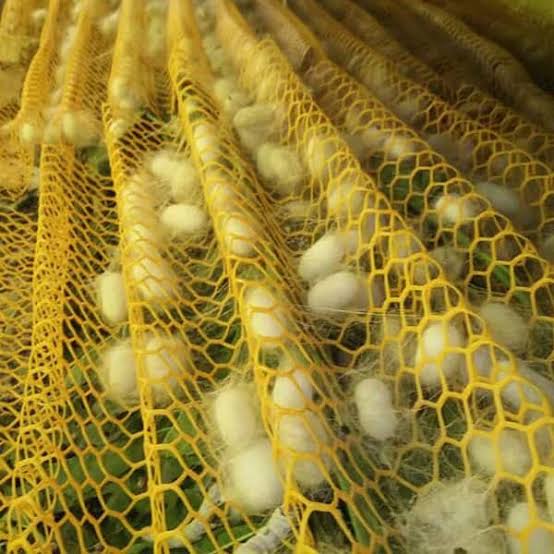
Mountage netting is a different job. When mature worms are ready to spin, they need a structure that gives each one space to build a cocoon without interference. Poor mountage geometry means double cocoons, misshapen cocoons and reeling losses — defects that show up as a grade penalty at sale rather than as a visible failure in the rearing house.
We supply both, plus shade netting for the rearing house itself. Silkworms are sensitive to temperature and humidity in ways most crops are not, and the rearing house environment is as much a specification decision as the nets inside it.
Features
Bed net apertures sized to the instar — the worms pass, the litter does not.
Lift-and-transfer replaces hand-picking. The single biggest labour saving in the rearing cycle.
Smooth filament and knit geometry so worms are not abraded during migration or transfer.
Survives repeated washing and disinfection between rearings — essential for disease control.
Matched shade netting for the house itself, where temperature and humidity drive everything.
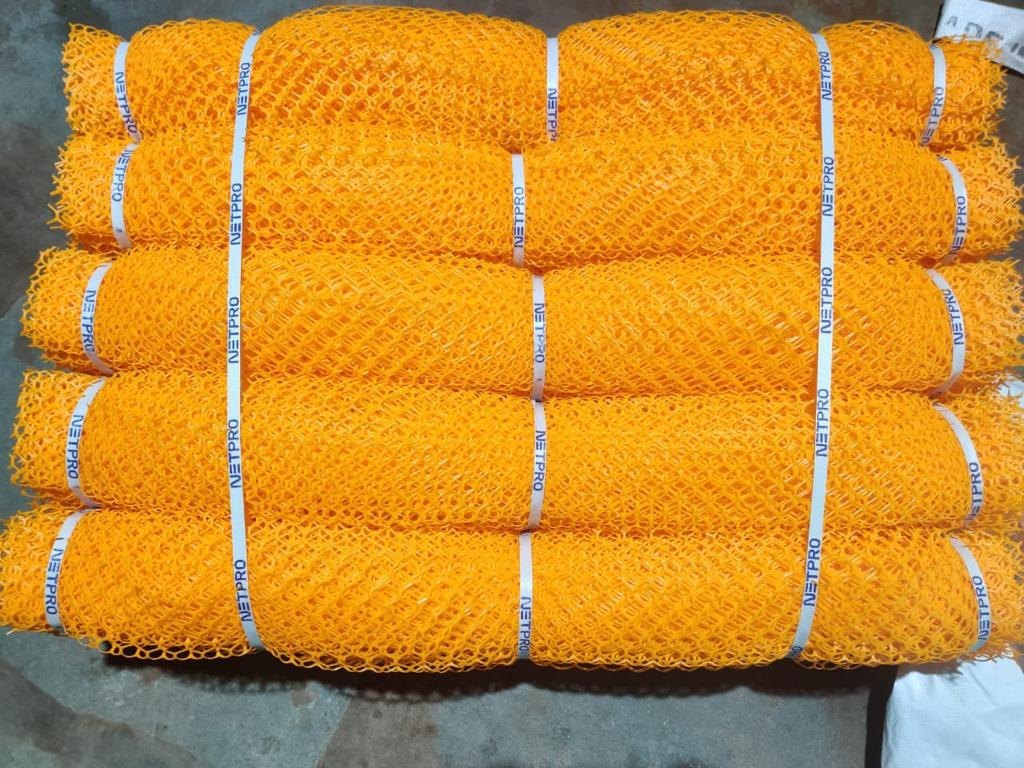
Supplied to your bed and rack dimensions rather than as generic rolls.
Specifications
Three distinct jobs, three distinct specifications. Bed netting mesh in particular has to match the instar you are rearing.
| Net Type | Material | Typical Use | Notes |
|---|---|---|---|
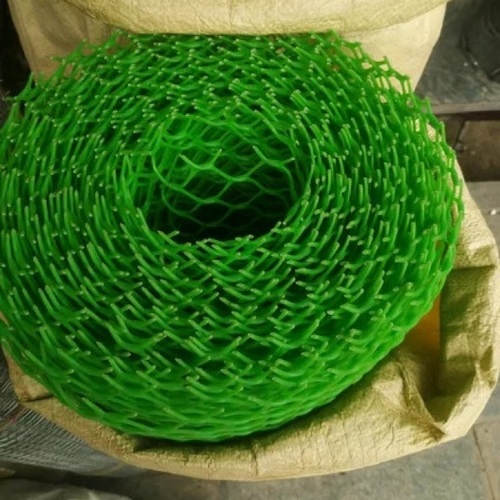
| Bed net — young instar | Nylon | Chawki / early instar cleaning | Finer mesh for small worms |
| Bed net — late instar | Nylon / HDPE | Fourth and fifth instar cleaning | Coarser mesh, higher load |
| Mountage net | Nylon / HDPE | Cocoon spinning support | Geometry drives cocoon quality |
| Rearing house shade | HDPE | House temperature and light control | See shade factor guidance |
Bed net mesh must match the instar being reared — a mesh that works for fifth instar will not pass chawki worms, and one sized for chawki will pass litter through in late instars. Tell us which instars you are handling and we will specify accordingly. Rearing house shade factor should be selected against your climate zone and season, not carried over from a vegetable specification.
Applications
Through the rearing cycle, from chawki to spinning.
Advantages
Sericulture margins are labour-sensitive and quality-sensitive at the same time. Netting affects both, which is why it repays specification attention rather than being bought as a generic consumable.
Gallery
Industries
FAQ
Lay the net over the rearing bed and put fresh mulberry leaf on top. The worms migrate up through the mesh to reach the food. Lift the net and the worms come with it, leaving the litter behind on the bed. What would otherwise be careful hand-picking of every worm becomes a single lift-and-transfer. Across a rearing cycle with repeated cleanings, this is the largest single labour saving available in the rearing house.
Yes, and getting this wrong wastes the whole benefit. Chawki and young instar worms are small and need a fine mesh they can pass through. Late instar worms are much larger and need a coarser mesh — but coarse enough for a fifth instar worm will let litter fall through when you are cleaning young beds. Most units run at least two mesh grades. Tell us which instars you handle and we will specify each.
Geometry. Each mature worm needs enough isolated space to build a single cocoon without a neighbour interfering. Poor mountage crowds worms together, producing double cocoons and misshapen cocoons that reel badly. Those defects do not look dramatic in the rearing house but they show up directly as a grade penalty at sale. Mountage is a quality decision, not a convenience one.
Yes, and they should be — but only with proper washing and disinfection between rearings. Sericulture is unusually vulnerable to disease carryover, and a net that has been through an infected rearing is a vector if it goes back in uncleaned. Our nets tolerate standard disinfection protocols. If you are not disinfecting between rearings, the net is not your main problem.
It depends on your climate zone and season, and it is a different question from shading a crop. Silkworms are sensitive to both temperature and humidity, and the rearing house has to hold a range rather than simply reduce light. Carrying over a shade factor from a vegetable specification is a common mistake. Send us your location and rearing calendar and we will specify against those. See agro shade nets for the range.
Enquiry
Send your rearing scale, the instars you handle and your bed dimensions. You will get mesh grades specified per instar, plus rearing house shade if you need it.
Related
Products that typically ship in the same order.
Protection
Rearing house shading — temperature and humidity drive the whole rearing.
 Protection
 Protection
Mulberry garden protection — bird, wind and tree guard netting.
 Field Systems