 Structures
Structures
Polyhouse Systems
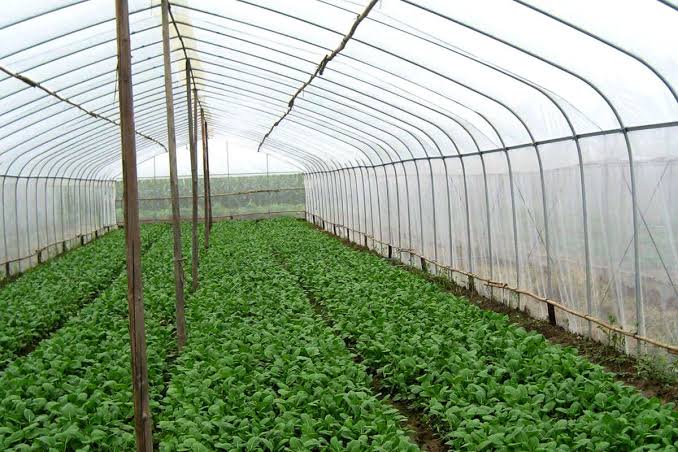
Pre-galvanised frames, UV film, ventilation designed around your site. A polyhouse is a climate decision that happens to be made of steel.
Overview
The structure is a climate instrument
Most polyhouse failures in India are not structural collapses. They are climate failures — a house that works beautifully in February and becomes unworkable in May, because it was specified as a shed rather than as a ventilation system.
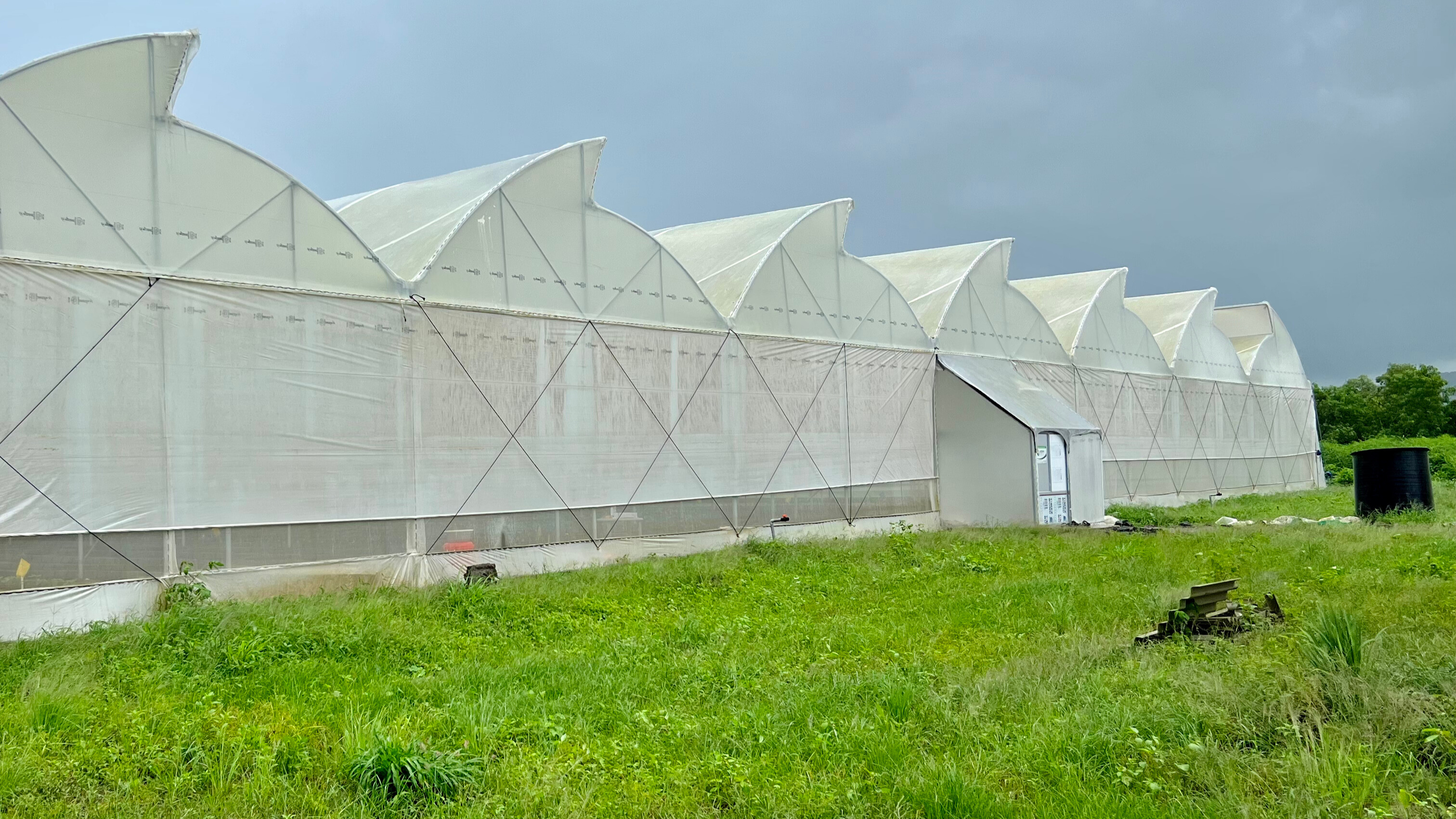
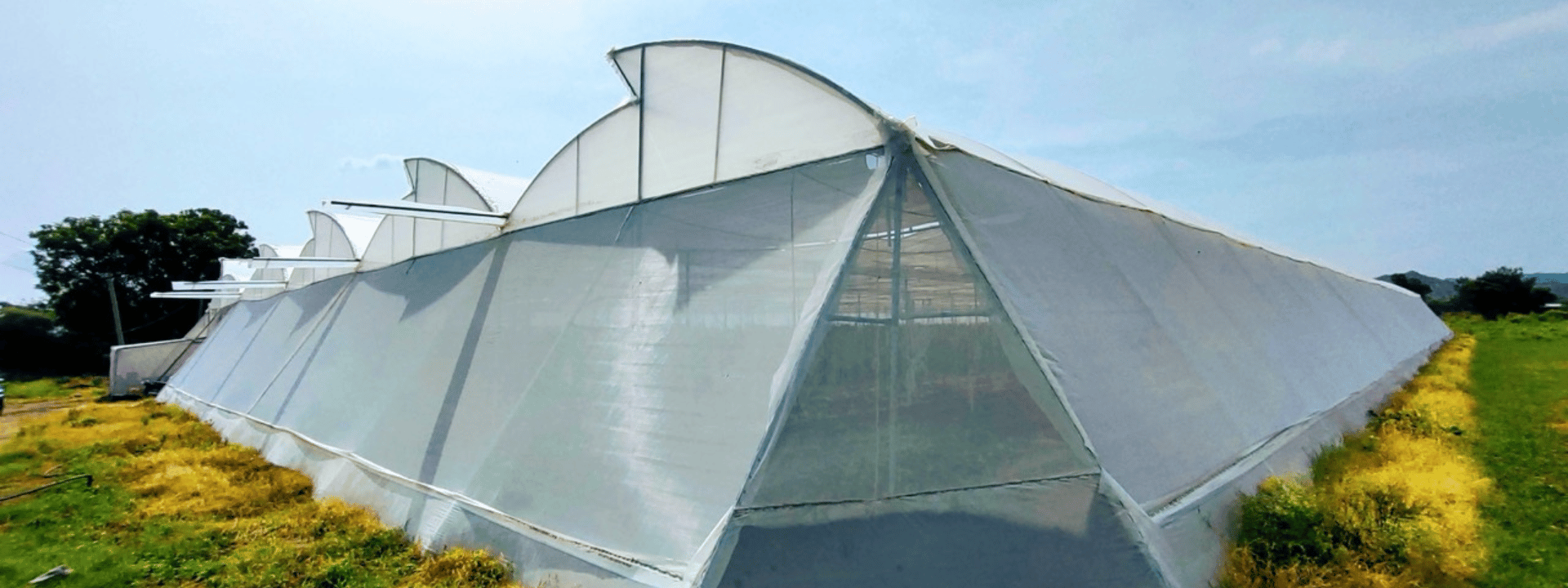
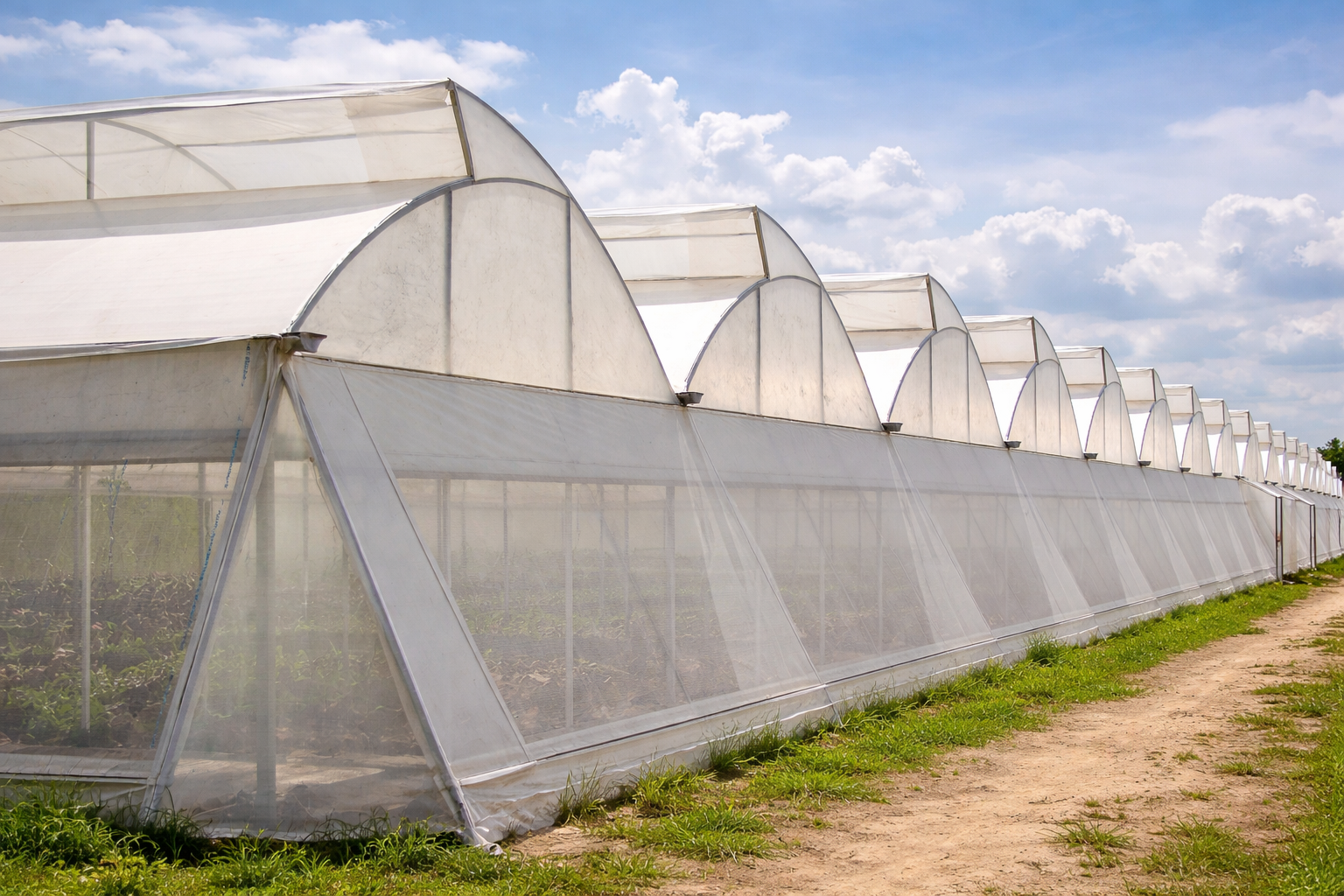
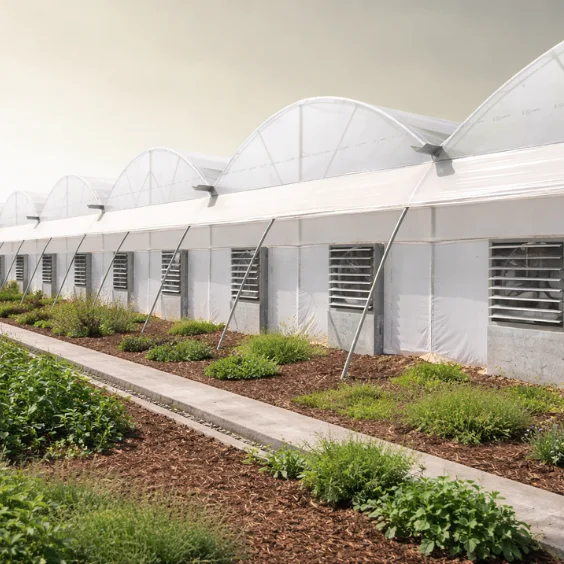
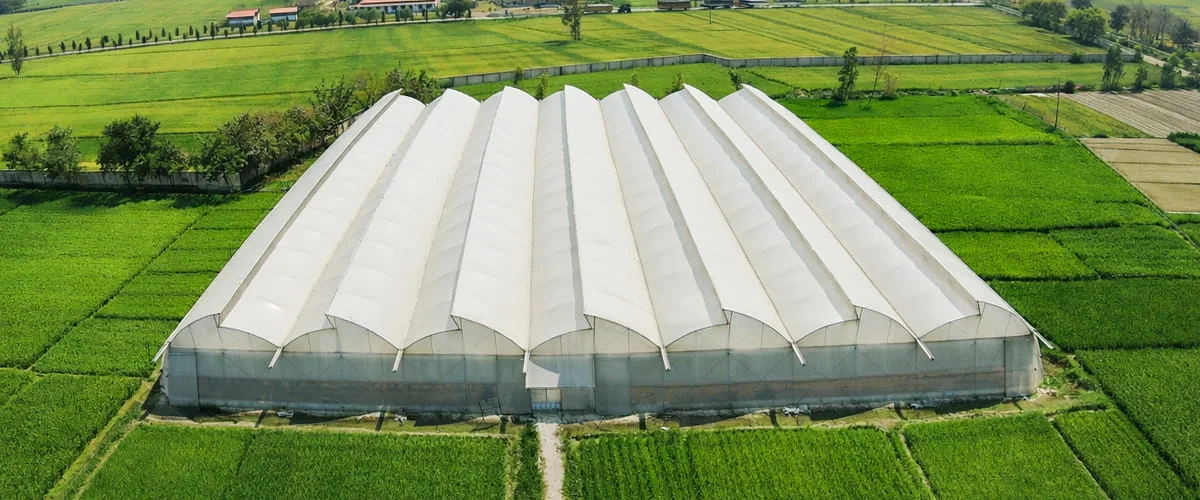
The decisions that matter are ridge height, vent area and orientation. Ridge height drives the thermal buffer above the crop: a low house has nowhere for hot air to go and cooks. Vent area drives how fast that air leaves. Orientation determines whether prevailing wind works with your ventilation or against it. Get these right and a naturally ventilated house holds a workable climate through most of the Indian year. Get them wrong and no amount of shade net rescues it.
The second thing people underestimate is wind loading. A polyhouse is a large, light structure with an enormous sail area. Indian pre-monsoon squall lines are violent and localised, and structures designed to generic specifications go over in them. Foundation depth, hoop spacing and bracing have to be designed against your actual site exposure, not copied from a brochure.
We supply naturally ventilated structures — the right answer for most Indian sites and most crops — and fan-pad systems where the crop genuinely justifies mechanical cooling. We will tell you honestly which one your situation calls for.
Features
Designed for the site
Ventilation-led design
Ridge height and vent area sized to move heat, not just to enclose space. This is the whole specification.
Wind-load engineered
Foundation, hoop spacing and bracing against your site exposure. Pre-monsoon squalls take generic structures.
Pre-galvanised frame
Galvanising applied before fabrication, so cut ends and joints are not the corrosion entry point.
Monsoon drainage
Gutter and runoff capacity sized for Indian rainfall intensity, not European averages.
Complete accessory line
Clamps, profiles, springs and fixings supplied with the structure — no site stoppages hunting parts.
Span to your plot
Bay and span dimensions to your land rather than to a standard kit that wastes a third of it.
Specifications
Structure types
The first decision is naturally ventilated versus fan-pad. It is a bigger decision than any dimension, and the honest answer is usually natural ventilation.
| Type | Ventilation | Typical Crops | Notes |
|---|---|---|---|
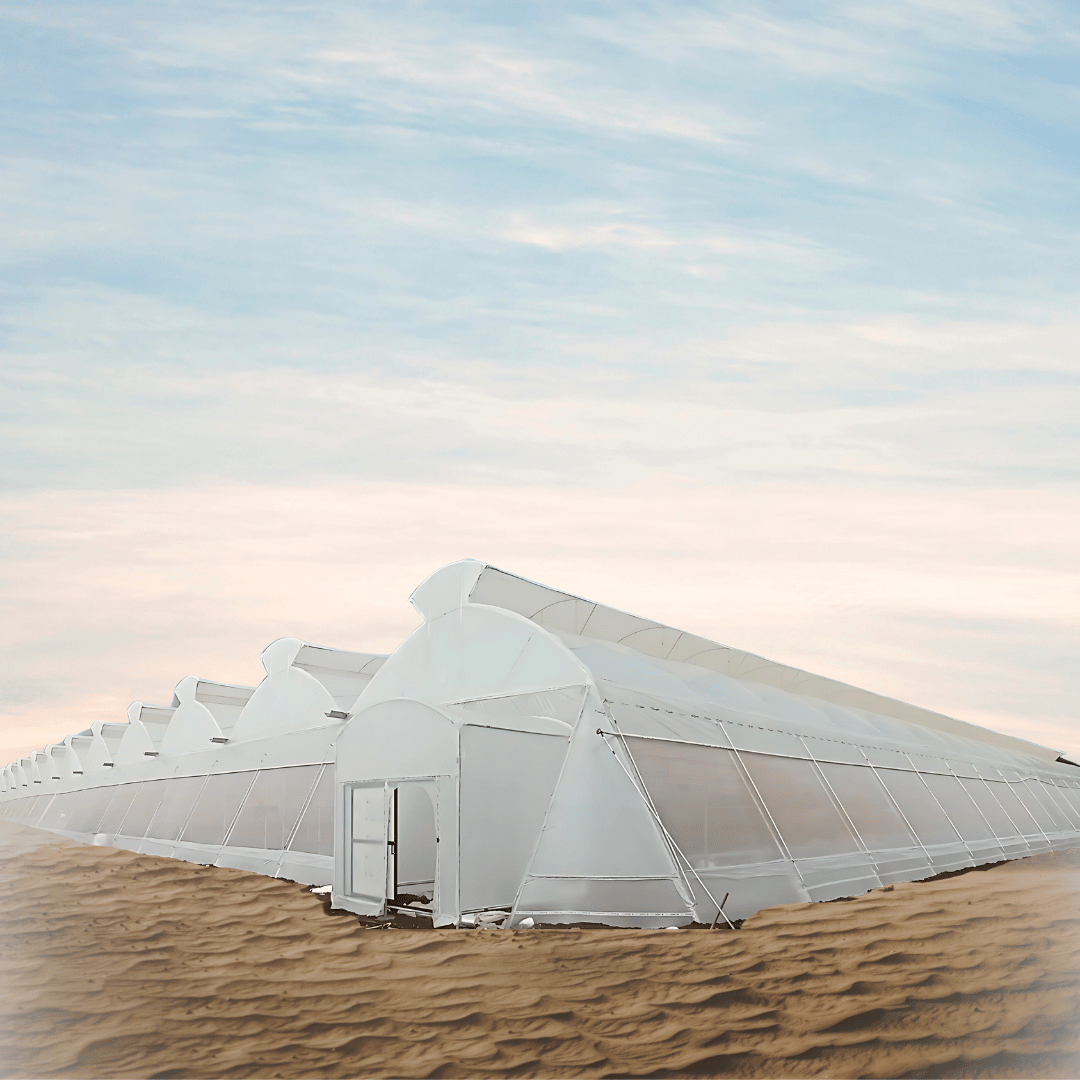
| Naturally ventilated | Roof vent + side roll-up | Tomato, capsicum, cucumber | Standard for most Indian sites |
| Naturally ventilated | Roof vent + side roll-up | Gerbera, Dutch rose | Higher ridge for thermal buffer |
| Fan-pad | Forced — fan and cellulose pad | High-value floriculture | Running cost; justify before specifying |
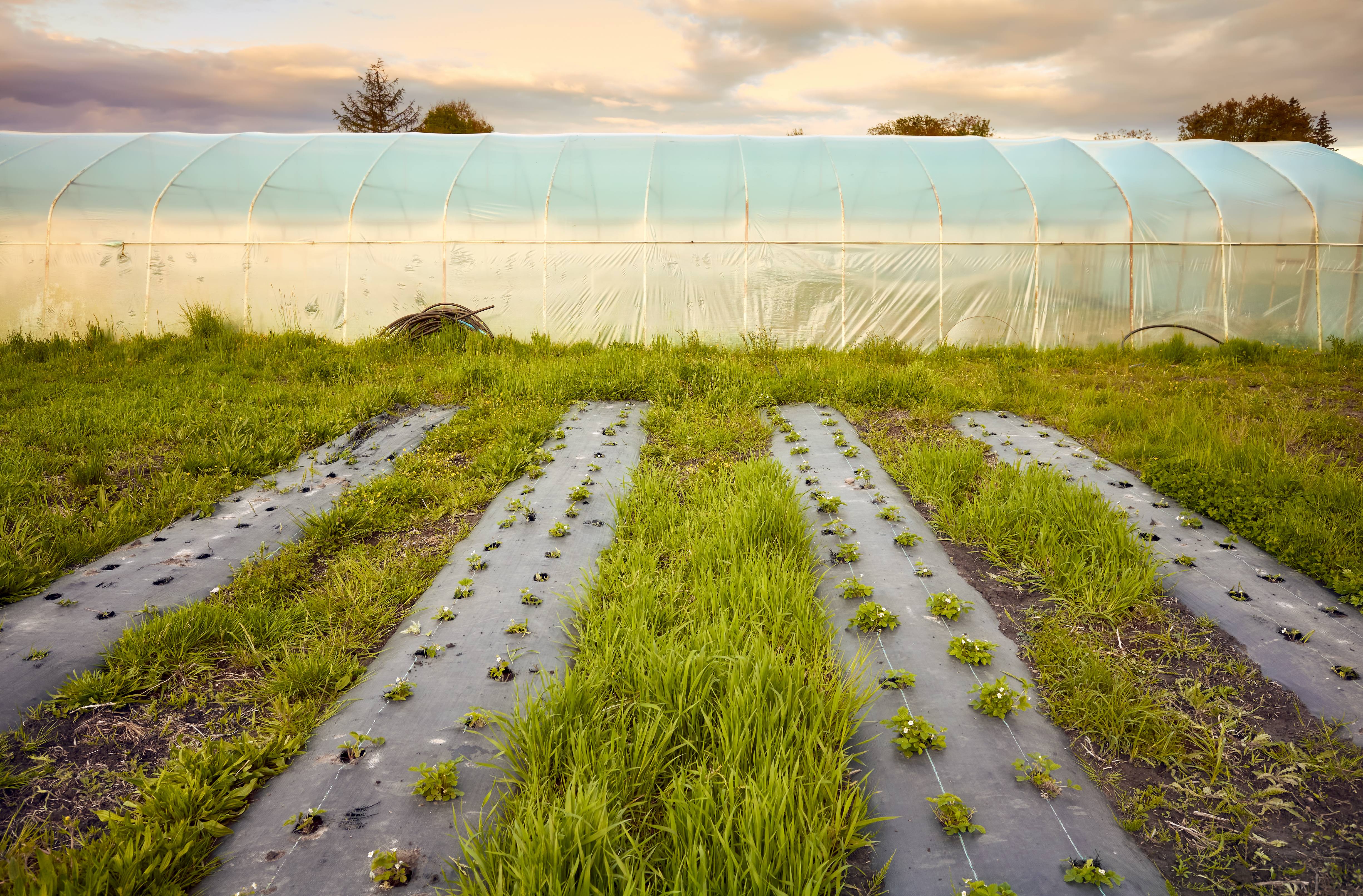
| Walk-in tunnel | End and side vent | Nursery, off-season vegetable | Lower cost, smaller span |
| Shade house | Open — net covered | Hardening, shade crops | See shade nets |
Structure dimensions, hoop spacing, foundation depth and vent area are site-specific engineering outputs, not catalogue selections. They depend on your wind zone, plot dimensions, crop and orientation. Any supplier quoting a polyhouse from a price list without asking about your site is selling you a shed. We quote after site discussion, not before.
Frame & covering
- Pre-galvanised steel tubular frame
- UV-stabilised polyethylene film, 200 micron typical
- Hoop spacing designed to wind loading
- Foundation depth to site conditions
System & support
- Complete accessory line supplied together
- Insect netting and shade integration
- Layout drawings with supply
- Installation guidance and site support
Applications
What goes inside
Crops where controlling the climate returns more than the structure costs.
Advantages
What the structure buys
A polyhouse is the largest single capital item most horticulture growers ever buy. What it returns is control — over season, over climate, over the pest and water equation.
- Season extended. Production in windows the open field cannot serve, which is where the price premium lives.
- Climate moderated. Temperature and humidity held in a workable band instead of tracking the weather.
- Rain excluded. Monsoon stops being a production stoppage and starts being someone else’s problem.
- Pest pressure down. An enclosed structure with insect netting cuts reinfestation dramatically.
- Water demand down. Lower evapotranspiration under cover, and fertigation becomes worth doing properly.
- Yield and quality up. Controlled conditions produce gradeable, uniform output rather than weather-dependent variation.
Gallery
On site
Industries
Sectors we supply
FAQ
Common questions
Naturally ventilated, for most Indian sites and most crops. A well-designed naturally ventilated house with adequate ridge height and vent area holds a workable climate through most of the year with no running cost. Fan-pad adds real cooling capacity but also adds electricity cost, maintenance, and a dependency on power supply that many rural sites cannot rely on. Fan-pad is justified for genuinely high-value floriculture in hot districts where the crop pays for it. If a supplier is pushing fan-pad for a vegetable crop, ask them to show you the running cost against the yield gain.
Foundation depth, hoop spacing and bracing, designed against your site exposure. A polyhouse is a large, light structure with enormous sail area, and Indian pre-monsoon squalls are violent and localised. Structures built to generic specifications go over in them — we see it every year. This is why we ask about your site before quoting rather than after. A structure quoted from a price list has not been designed for your wind zone, and the saving disappears the first time it fails.
A UV-stabilised film at appropriate thickness should give several seasons. The variables are the UV package, the thickness, and how well it was installed — film that flaps against the frame abrades and fails early regardless of grade. Film is a consumable and should be budgeted as a recurring cost from the outset, not treated as a surprise. Anyone telling you the film lasts as long as the structure is not being straight with you.
Yes, and it is often the sensible approach — but only if the initial layout is designed for it. Bay-based structures extend along their length if the foundation, orientation and drainage were planned for the final footprint. Retrofitting expansion onto a structure that was not planned for it usually means compromised drainage or awkward orientation. Tell us your eventual ambition at design stage even if you are building a fraction of it now.
We cannot answer that honestly without knowing your site, span, crop and specification, and any number quoted before those conversations is a marketing figure rather than a price. Cost is driven by span, height, ventilation type, wind-load requirement, foundation conditions and covering specification. What we can tell you is that the cheapest quote you receive is usually cheap because it has skipped the wind-loading engineering — and that is the one that fails. Send us your site details and we will quote against a documented specification.
Enquiry
Request a
specification.
Send your plot dimensions, district, crop and prevailing wind if you know it. You will get a designed specification with the reasoning — not a per-square-metre number.
Related
Specified alongside
Products that typically ship in the same order.
Structures
 Structures
Greenhouse Accessories
Clamps, profiles, springs and fixings — supplied with the structure, not after it.
View product
 Protection
 Growing Media