

 Protection
Shading & Netting
Rose Bud Nets
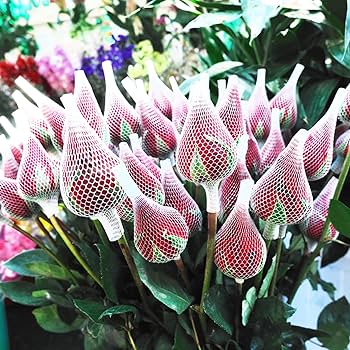
Sleeve netting for developing rose buds. In cut flower work the flower is the product — and a scuffed petal edge is a grade lost between the plant and the box.
Overview
The damage happens after the growing
A Dutch rose grower can do everything right for twelve weeks and lose the grade in the last three days. Petal edges bruise against neighbouring stems. Buds open unevenly. Form loosens in transport. None of this is a growing failure — it is a handling failure, and it is where the margin goes.
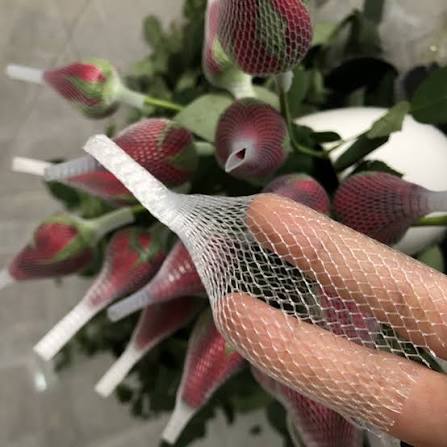
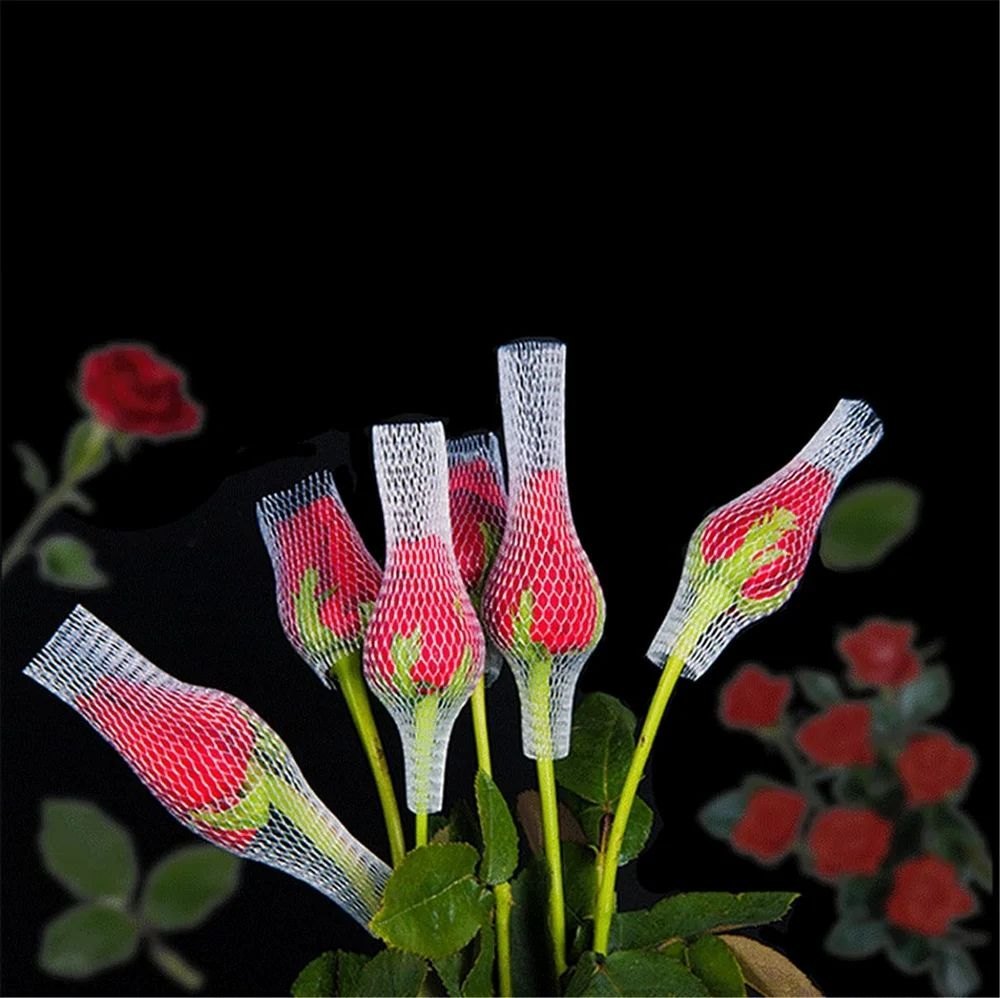
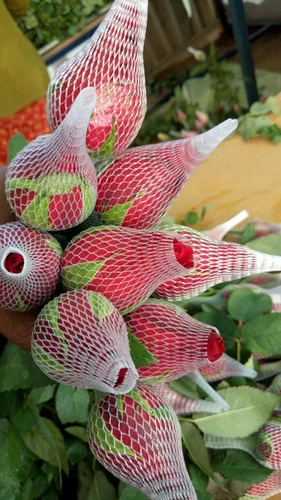
Bud netting addresses it directly. A fine mesh sleeve fitted over the developing bud holds the petals in position as they mature, protects the vulnerable outer edges from mechanical contact, and keeps the bud form tight through cutting, grading and packing. The net travels with the flower.
The specification is finer than it looks. Mesh has to be open enough to avoid restricting the bud or trapping humidity — a sleeve that holds moisture against the petals invites botrytis, which is a worse problem than the one you were solving. And it has to be fine enough to actually protect the edge. Sleeve size has to match variety and stage: too tight deforms the bud, too loose does nothing.
We supply sleeve netting in the grades and sizes Indian cut flower units actually use, including colour-coded options where grading by sleeve colour speeds the packing line.
Features
Protecting the product
Petal edge protection
The outer petal edge is the first thing to scuff and the first thing a grader looks at.
Form retention
Holds bud shape through cutting, grading, packing and transport.
Breathable mesh
Open enough to avoid trapping humidity against petals — a closed sleeve invites botrytis.
Size-matched sleeves
Sized to variety and bud stage. Too tight deforms, too loose does nothing.
Colour-coded grading
Optional colour coding so the packing line can grade by sleeve at a glance.
Light and non-abrasive
Adds negligible weight and will not itself abrade the petal it is protecting.
Specifications
Sleeve grades
Sleeve selection is driven by variety and bud size at application. Send us the varieties you run and we will match the grades.
| Grade | Bud Stage | Typical Varieties | Colour Options |
|---|---|---|---|
| Small sleeve | Early bud | Compact-headed Dutch rose | White, natural |
| Standard sleeve | Mid bud | General Dutch rose production | White, natural, coded |
| Large sleeve | Late bud / large head | Large-headed varieties | White, natural, coded |
Sleeve sizing is variety-specific and there is no universal grade. Bud dimensions vary considerably between Dutch rose varieties and with the stage at which you apply. Send us your variety list and application timing, and request samples before committing to a bulk order — this is a product where trialling on your own crop is worth the delay.
Material & construction
- Fine nylon / polyethylene mesh
- Non-abrasive filament finish
- Breathable — will not trap humidity at the petal
- White, natural and colour-coded options
Supply & support
- Sized to variety and bud stage
- Samples available before bulk commitment
- Colour coding for packing line grading
- Bulk packs for high-throughput units
Applications
Where bud netting is used
Cut flower production where the flower head is the graded product.
Advantages
Where the grade is won
Cut flower pricing is steeply graded. The difference between a top grade and the next one down is often a petal edge — which makes bud netting one of the highest-leverage consumables in the house.
- Higher grade realisation. Protected edges hold top grade. The price step between grades is where this pays for itself.
- Transport survival. Form held through packing and cold chain — the flower arrives as it left.
- Less mechanical loss. Buds no longer scuff against neighbouring stems in a dense house.
- Faster grading. Colour-coded sleeves let the packing line sort by sight rather than by measurement.
- Export presentation. Consistent form and undamaged edges are what export buyers are actually paying for.
- Low cost per stem. Against the grade differential it protects, sleeve cost is marginal.
Gallery
In the flower house
Industries
Sectors we supply
FAQ
Common questions
At the bud stage, before the petals are large enough to be damaged by contact with neighbouring stems but late enough that the sleeve is not restricting development. The exact timing is variety-specific and depends on your house density and your cutting cycle. Growers generally converge on a stage through trial on their own crop — which is why we recommend sampling before you commit to a bulk order.
It can, if you specify the wrong mesh. A sleeve that traps humidity against the petal creates exactly the microclimate botrytis wants, and you will have traded a mechanical damage problem for a disease problem — a worse trade. This is why breathability is a specification requirement rather than a nice-to-have. Open mesh, correct sizing, and sensible house humidity management together make sleeves safe. Fine mesh plus a humid house is asking for trouble.
By variety and by the bud stage at which you apply. There is no universal grade — Dutch rose varieties differ considerably in head size and shape. Too tight and you deform the bud you were trying to protect. Too loose and it does nothing. Send us your variety list and your application timing and we will match grades; then trial the samples before bulk ordering.
Speed on the packing line. If sleeve colour corresponds to a grade or a variety, graders sort by sight rather than by inspection, which matters when you are moving volume against a cold chain deadline. It is optional and only worth doing if your throughput justifies it — for a small unit it adds complexity without saving time.
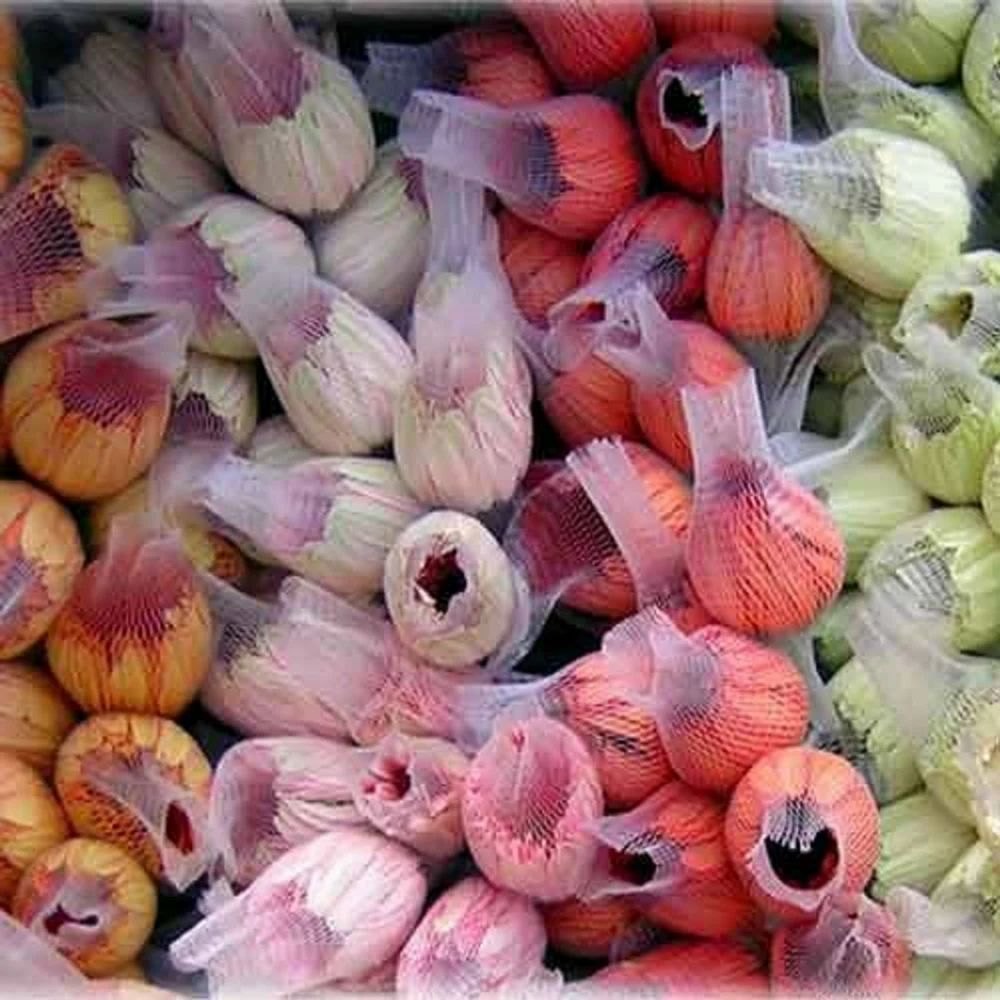
The principle applies to any cut flower where the head is the graded product and mechanical damage is the main quality risk — gerbera and carnation are the common ones. Sizing and mesh differ, so a rose sleeve is not a gerbera sleeve. Tell us the crop and we will advise whether sleeving is worth it for your situation or whether the problem is better solved with house spacing.
Enquiry
Request a
specification.
Send your varieties, your application stage and your volume. We will match sleeve grades — and send samples first, because this is a product worth trialling on your own crop.
Related
Specified alongside
Products that typically ship in the same order.
Protection
 Protection
 Structures
 Field Systems